Parkour Escape: Night Forest
Blox GlobalAdventure
3.27.00 Reviews
- Version
- 1.14
- Installs
- 1.00M
- Age Rating
- Everyone
Screenshots
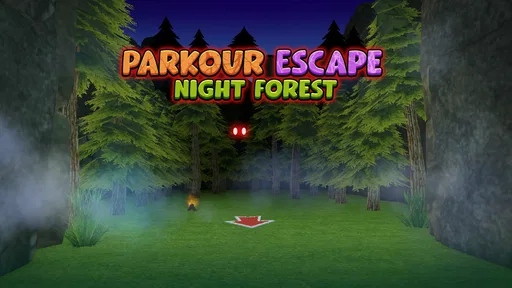
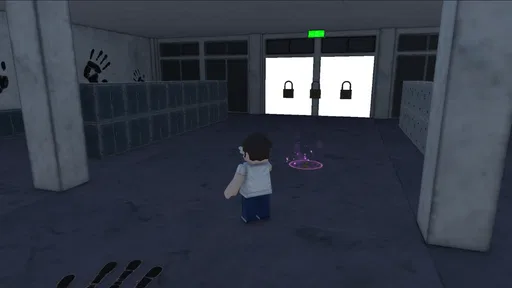
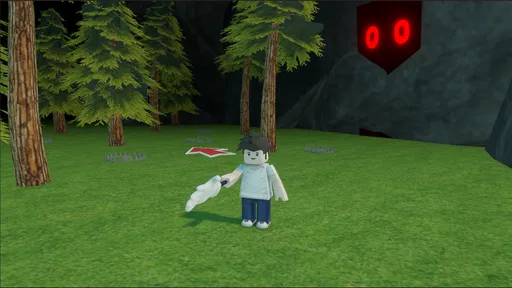
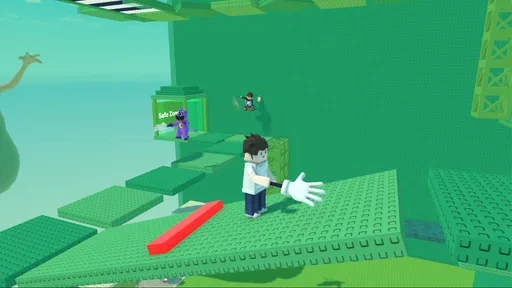
Our Review of Parkour Escape: Night Forest
 Analysis by Appyee
Parkour Escape: Night Forest is the kind of adventure game I would try when I want a quick burst of tension rather than a long story-driven session. I guide a character through a dark woodland, use movement to get past obstacles, avoid frightening creatures, and look for a way out. The idea is easy to understand, but the atmosphere makes each mistake feel more dramatic than it would in a bright, relaxed platformer.
After spending time with it, I found the strongest part of the experience is the contrast between simple goals and uneasy surroundings. You are not asked to learn a complicated world before playing. Instead, the game puts pressure on basic decisions: when to move, when to hesitate, and whether a route is worth the risk. That makes it approachable for a first-time player, while the darker presentation gives it more personality than a plain obstacle course.
What to expect when you begin
This is a free adventure game from Blox Global, aimed at an Everyone audience. It has passed the one-million-install mark, although its average rating sits at 3.2 from roughly 1.2 thousand ratings, so I would approach it with realistic expectations rather than assuming it will feel as polished as a major console platformer.
The central loop is straightforward: move through the forest, handle parkour-style sections, stay away from monsters, and keep progressing toward escape. The game’s short description calls it “Parkour Escape,” but the experience is more about surviving a threatening route than performing elaborate stunt combinations. I found that distinction useful because it changes how I play. I am not constantly chasing speed; I am reading the space and trying not to turn a manageable section into a panic-filled mistake.
The dark setting does a lot of the emotional work. Trees, limited visibility, and the possibility of a monster appearing make familiar movement feel less predictable. Even when the action itself is uncomplicated, the presentation encourages me to look ahead before committing. That is the main reason this game can appeal to players who enjoy light horror atmosphere without wanting a complex horror adventure.
It is also important to understand what kind of player may become frustrated. Anyone expecting a substantial narrative, deep character development, or a large collection of carefully explained systems may find the experience thin. This is better suited to short sessions, casual attempts, and players who enjoy repeating a route to improve their timing. If you prefer calm exploration or a clearly guided story, a traditional adventure game may be a better choice.
The game is free to install, with optional purchases ranging from $0.99 to $19.99 per item. I would keep that in mind before handing the phone to a child, even though the content rating is Everyone. The age label describes the intended content audience, while in-app purchases are a separate practical consideration for families.
How I approached the first launch
For a smoother start, I recommend beginning with a quiet few minutes rather than opening the game while distracted. The forest setting depends on attention: if I am switching between the game and messages, I am much more likely to react late to an obstacle or a monster. A short, focused attempt teaches more than a longer session played impatiently.
The current version is 1.14, and the game runs on devices using Android 6.0 or later. That makes it accessible to a broad range of Android phones and tablets, but compatibility alone does not guarantee the same comfort on every device. On a smaller screen, dark scenes can make it harder to distinguish the safe path from the background, so I prefer playing with the display at a comfortable brightness and keeping the device steady.
I would not begin by trying to rush. My first goal would be to learn the relationship between movement and danger. Watch how much space is available, notice where a jump or turn seems to lead, and treat the opening attempt as a route-reading exercise. That approach is less exciting than immediately sprinting, but it gives a first-time player a better chance of reaching a meaningful checkpoint or escape section.
Another useful habit is to separate visual fear from actual danger. A dark forest can make every shadow seem important, yet reacting to everything at once usually causes poor movement. I found it more effective to identify the immediate problem in front of me, solve that, and only then prepare for the next section. This simple rhythm keeps the game from becoming a blur of hurried taps or movements.
The first successful action matters more than speed
Your first satisfying success should not be finishing as quickly as possible. It should be clearing a difficult-looking section without allowing the atmosphere to make you panic. Once I stopped treating every monster sighting as a reason to move blindly, the parkour became easier to understand. The goal is controlled progress: create enough distance, choose a route, and keep moving only when the next action is clear.
For a new player, I suggest using the first attempt to answer three practical questions through play. Which movement feels safest near an obstacle? How much time do you have when danger appears? Does rushing create more mistakes than it prevents? The answers will depend on your device and your reactions, but asking these questions turns failure into useful information instead of simple repetition.
A realistic everyday scenario would be playing during a short break between tasks. I might have ten minutes, complete a few attempts, and stop after learning one section rather than expecting a full adventure. That works well here because the premise is immediately understandable. I do not need to remember a complicated plot before returning later; I can pick it up, focus on the route, and try again.
My most effective early tactic is to value survival over style. If a route feels slower but gives more time to react, I choose it. Parkour games often tempt players to take the most dramatic line, but the forest’s threat changes the trade-off. A flashy shortcut is only useful if I can read the landing and still respond to what comes next. Otherwise, the safer movement is usually the smarter one.
That is also where the game differs from a standard endless runner. In an endless runner, forward momentum often dominates the experience, and the player learns to react to a steady stream of predictable patterns. Here, the dark environment and monster threat make caution more valuable. Compared with a conventional platformer, it feels less like collecting every item and more like making it through an uncomfortable place intact.
Common confusion during early attempts
The first source of confusion is the darkness itself. Players may assume that every visible shape is an obstacle or that every pause means they have missed something. I found it better to avoid over-reading the scenery. Focus on the immediate path, observe how the game presents danger, and make one deliberate movement at a time. The environment is meant to create uncertainty, but uncertainty does not require constant panic.
A second confusion is the meaning of failure. Losing a run can feel like a sign that the game is unfair, especially when a monster catches you after a rushed decision. Before deciding that a section is impossible, repeat it with a different pace. Try approaching the same area with more patience, and pay attention to whether the mistake came from the route or from moving before the next action was visible.
Some players may also expect the word “parkour” to mean a large set of advanced tricks. I would not approach it that way. The appeal is the combination of movement and escape pressure, not necessarily a technical training system. If you want a game built around detailed movement mastery, a dedicated platformer may offer more depth. If you enjoy the feeling of navigating a threatening route, this narrower focus can be enough.
The rating can create another expectation problem. An average of 3.2 is neither a strong endorsement nor a reason to dismiss the game immediately. To me, it suggests that the experience will be appealing to some players and less convincing to others. The right question is whether you enjoy its specific mix of dark atmosphere, simple adventure structure, and repeated attempts. Players who want refined variety may be disappointed, while casual horror-parkour fans may find a pleasant time-killer.
In-app purchases are worth treating carefully. Because the game is free, I would play the opening content without assuming that every optional purchase is necessary for progress. If you are installing it for a younger player, I would review purchase controls on the device before play. That is not a criticism of the game’s age rating; it is simply a sensible boundary whenever a free mobile game offers paid items.
Another practical issue is session length. The tension is enjoyable in small doses, but repeated failures can become tiring if I keep forcing the same attempt without changing my approach. My advice is to stop after identifying what went wrong. Returning later with a calmer reaction often works better than continuing while frustrated. This is especially true on a phone, where a cramped grip or divided attention can make movement feel less reliable.
Who will enjoy it, and who should skip it?
I would recommend it to players who like accessible adventure games with a spooky setting, short repeatable attempts, and an immediate objective. It can work for someone who wants a quick game before bed, a tense distraction during a commute, or a simple challenge that does not require learning a large cast of characters. The Everyone rating also makes its presentation broadly approachable, though parents should still remember the optional purchases.
It is a particularly good fit for players who enjoy improving through observation. The satisfaction does not come only from reaching the end; it comes from recognizing why a previous attempt failed and adjusting the next one. That makes the game more rewarding for patient players than for people who need constant new content. If you like repeating a route until your timing improves, you are more likely to appreciate its structure.
I would skip it if your priority is a rich story, peaceful scenery, competitive multiplayer, or a highly detailed parkour simulator. Nothing about the core premise suggests that it is trying to replace those experiences. A story-focused adventure will give you more character and world-building, while a polished precision platformer may offer tighter movement and more demanding level design. This game’s identity is smaller: atmosphere, escape, and quick decisions.
It may also be a poor match if dark visuals make it difficult for you to distinguish the play area. In that case, the central mood can become a usability problem rather than an enjoyable challenge. I would try a brief session first and decide whether the screen remains readable on your particular device. The game is more enjoyable when the tension comes from your decision, not from being unable to see what the route is asking you to do.
What to do after the first escape attempt
Once you have completed an initial section or made meaningful progress, the next step is to refine one habit instead of trying to improve everything at once. For example, concentrate on approaching obstacles with fewer rushed movements. On another attempt, focus on keeping enough distance from danger. This narrow practice makes improvement easier to notice and prevents the game from feeling like random trial and error.
I also recommend deciding what kind of session you want before starting. A learning session means observing the route and accepting failure. A challenge session means trying to move faster. Mixing those goals can be frustrating because a cautious attempt may be successful while a fast attempt fails. The game feels fairer when I judge the run by the goal I chose, rather than by an unrealistic demand to be both perfect and quick.
For families, the sensible next step is to establish purchase expectations before the game is played regularly. Since the title is free but includes paid items, I would make sure the player understands whether purchases are allowed and who approves them. That small conversation prevents the common misunderstanding that free installation means every part of the experience has no cost.
For adults deciding whether to keep it installed, I would give it a few focused sessions rather than judging it from a single failed run. Its appeal depends on whether the dark forest atmosphere adds excitement or simply makes navigation irritating. If you enjoy the mood and start learning from mistakes, it can become a handy short-session adventure. If the movement feels repetitive after the novelty fades, there is little reason to force yourself through it.
Overall, Parkour Escape: Night Forest is a modest but approachable mobile adventure built around escaping a threatening woodland. I like that the premise is clear from the first attempt and that progress rewards calm observation more than frantic movement. Its limitations are just as clear: players seeking deep story, broad variety, or highly technical parkour should look elsewhere.
My final recommendation is cautious but positive for the right audience. Install it if you want a free, atmospheric challenge that you can understand quickly and play in short bursts. Start slowly, treat the first run as practice, and judge the game by how much you enjoy improving your decisions. If that loop feels satisfying, the forest has enough tension to keep drawing you back; if not, a fuller platforming or story adventure will probably serve you better.
Verdict
Strengths of Parkour Escape: Night Forest
- Fast-paced parkour movement makes every escape feel exciting.
- Dark forest atmosphere creates a memorable survival experience.
- Short levels are convenient for quick gaming sessions.
- Simple controls are easy for new players to learn.
- Increasing obstacles provide a satisfying challenge over time.
Limitations of Parkour Escape: Night Forest
- Some areas can feel repetitive after extended play.
- Limited story details may leave the adventure feeling shallow.
- Dark visuals can make obstacles difficult to spot on small screens.
- Difficulty spikes may frustrate players during later stages.
- Ads may interrupt gameplay, depending on the version installed.
Other Releases by Blox Global
View All
Easy Parkour: Escape Run Obby
Casual4.3

Blox Tower: Slap Master
Adventure4.1

Obby: Disaster Survival
Adventure3.3
Similar Picks in This Category
View All
Roblox
Roblox Corporation4.2

Pokémon GO
Niantic, Inc.3.5

Ninja warrior: legend of adven
TOH Games4.6

Ninja Arashi
Black Panther4.6

Eyes - The Horror Game
Fearless Games sp. j.4.5

Critical Action:Gun Strike Ops
FPS Shooter & Action Game4.3
Frequently Asked Questions
What is Parkour Escape: Night Forest about?
Parkour Escape: Night Forest is an action and obstacle-running game set in a dark, atmospheric woodland. You guide a character through dangerous paths, jumps, platforms, and environmental hazards while trying to escape the forest. The game focuses on timing, movement, and quick reactions, with a tense nighttime setting that makes every jump and sudden obstacle feel more challenging.
Is Parkour Escape: Night Forest suitable for beginners?
The game is easy to understand at first because its main idea is straightforward: run, jump, avoid hazards, and reach the exit. However, the controls require practice, especially when obstacles appear quickly or when accurate jumps are needed. Beginners may fail several times while learning the level layouts, but the trial-and-error design makes gradual improvement feel rewarding.
Does Parkour Escape: Night Forest require an internet connection?
Parkour Escape: Night Forest may be playable without a constant internet connection, which is convenient for short sessions while traveling or when mobile data is unavailable. Nevertheless, some versions can include advertisements, updates, analytics, or other online features that require connectivity. It is best to check the store listing and test the game after installation before relying on offline play.
Are there advertisements or in-app purchases in the game?
The availability of advertising and optional purchases can depend on the version of Parkour Escape: Night Forest and the platform where it is downloaded. Players should review the official store page for current information about ads, paid items, or other monetization features. If advertisements are included, they may appear between attempts or after completing certain actions, so this is worth checking before downloading.
What devices are compatible with Parkour Escape: Night Forest?
Compatibility depends on the operating system, device model, and the version published by the developer. Before installing Parkour Escape: Night Forest, check the official Google Play or App Store listing for the required Android or iOS version and available storage. Devices with newer software and adequate memory will generally provide smoother controls, faster loading, and more stable performance during demanding scenes.
Play our best games!


